






Defensible AI Implementation
Ensuring AI initiatives are grounded in stable definitions, explicit assumptions, and clear ownership before scale introduces risk.
For healthcare leaders navigating data, governance, and responsible innovation.
Speaker reel — 2:15 on stage
As seen in
Yahoo News, NewsNation, InformationWeek, Consumer Affairs, Tech Times, The AI Journal
Book Me to Speak
Christopher (Chris) Hutchins speaks to healthcare executives, boards, and clinical leaders about agentic AI, generative AI, and AI governance in healthcare, with a focus on data readiness and responsible implementation.
Recent keynote: On April 29, 2026, Chris Hutchins delivered “AI in Healthcare: Capabilities, Limits, and Responsibilities” at IFHIMA’s Focus on the Future of HIM 2026. View the official event page.
What governance failures sound like before they look like model failures.
What a 12-month AI plan looks like when written for the board, not the vendor.
Committee structures, decision rights, and review cadences that survive regulators and clinicians.
The four data foundations every healthcare AI program assumes—and which to build first.
How to evaluate AI vendors without becoming their reference architecture.
Designing AI deployments so clinicians shape the system, not just absorb it.
The five questions every board should be asking, and the answers worth listening for.
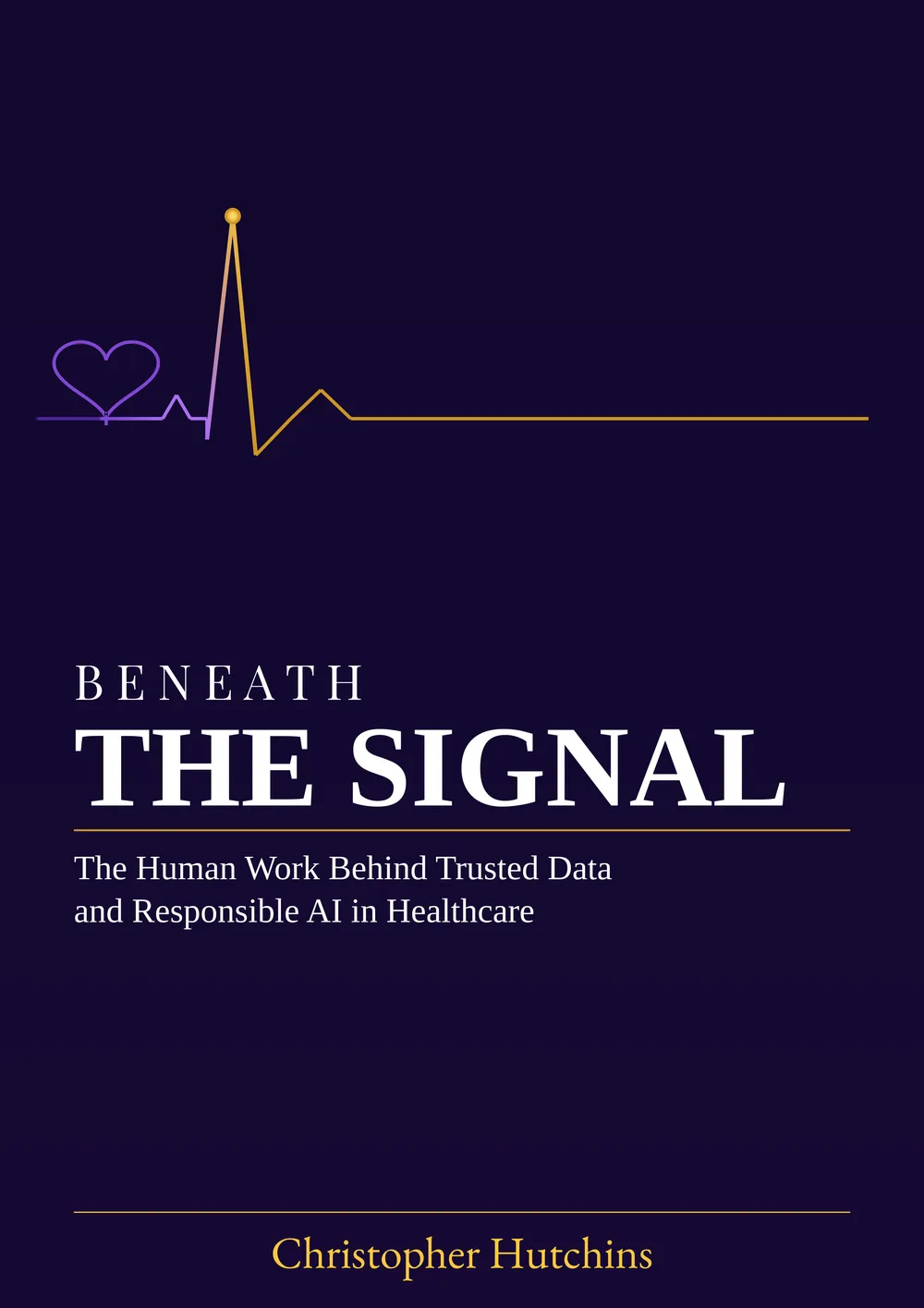
The Human Work Behind Trusted Data and Responsible AI in Healthcare
Beneath the Signal is about the human work behind trusted data and responsible AI in healthcare — the work behind every dashboard, every metric, and every model, and why it decides whether transformation holds or quietly falls apart.
Beneath the signal is a reflection on what leadership really looks like inside complex healthcare systems. Drawing from over 30 years of experience, Chris Hutchins brings readers into the moments most people never see—where definitions break down, decisions carry real consequences, and trust is either built or quietly lost.
This is not a book about frameworks or titles, but about the people doing essential work without recognition and the leaders who create clarity, alignment, and accountability when it matters most. Through real stories and lived experience, he shows how leadership is practiced in the details, where listening, consistency, and responsibility shape outcomes far more than authority. At its core, the book is about making the invisible visible and leaving people and systems stronger than you found them.
Available now.
Read a related essay: Who Owns the Data Your AI Runs On.
Less than 25% of employees say they truly trust leadership.
Yet many CEOs believe engagement is high. That disconnect becomes dangerous during times of rapid change.
Someone once asked me a question many people are often asking themselves: "Should I be worried that AI is going to take my job?" That question doesn't come from technology. It comes from uncertainty and from leaders who haven't clearly communicated what AI is and isn't. The people who should be worried aren't the ones learning. They're the ones assuming technology will think for them.

Plain and simple:
It can generate answers. It can create efficiency. But it cannot exercise judgment. It cannot feel context. It cannot understand the human consequences of a decision unless that context is intentionally provided. And when leaders treat output as truth without examining the inputs, trust erodes. That conversation reinforced something I've witnessed for over 30 years inside complex healthcare systems: technology does not replace judgment. It amplifies it. Or it exposes the absence of it.
My work is rooted in that principle. I educate leaders on proper AI implementation, so they can restore trust, culture, and performance. If you want to lead through technological change with steadiness and perspective, let's talk.
Work with chris

I founded Hutchins Data Strategy to help healthcare leaders implement AI and enterprise data strategy responsibly. After over 30 years leading data and analytics inside major health systems, I saw firsthand how quickly technology can outpace governance and how humanity got lost within the system.
Through advisory, risk management, integration, and data strategy, I help leaders make AI decisions that are defensible, aligned to operational reality, and built to strengthen institutional trust.
Learn more
I educate leaders on proper AI implementation, so they can restore trust, culture, and performance.

Senior healthcare leaders operating in high-stakes environments where clinical, operational, financial, and regulatory pressures intersect.
Leaders and executives who know AI is moving forward and want governance, clarity, stronger team relations, and decision discipline to move with it.
Investors and board members evaluating AI and healthcare technology risk, governance maturity, and long-term defensibility.
Healthcare technology companies looking to align product strategy with real-world operational, regulatory, and institutional demands.
Ensuring AI initiatives are grounded in stable definitions, explicit assumptions, and clear ownership before scale introduces risk.
Designing decision rights, escalation paths, and accountability structures that function when scrutiny rises.
Aligning analytics, reporting, and forecasting to operational reality—so data informs decisions leaders can stand behind.
Partnering with capable leaders who want to navigate AI responsibly and lead meaningful work with clarity, steadiness, and discipline.


Easy access to everything you need to book me for your next event or media appearance.

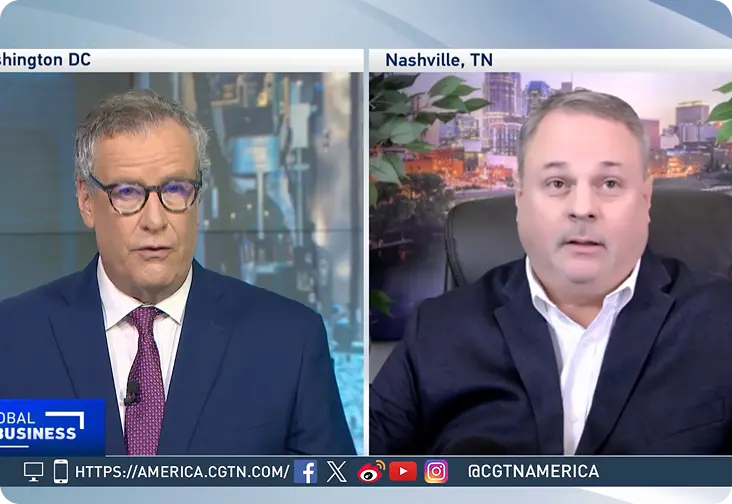
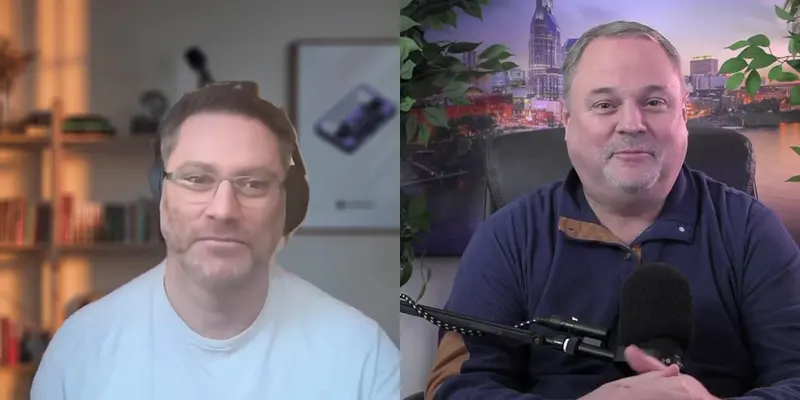
As featured in

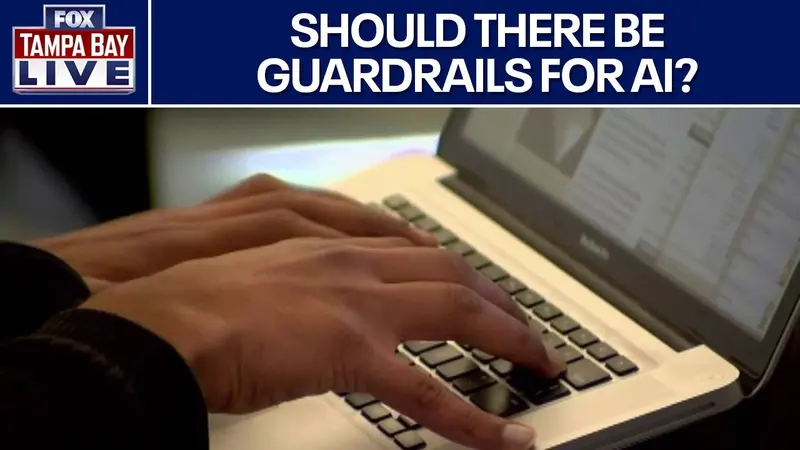


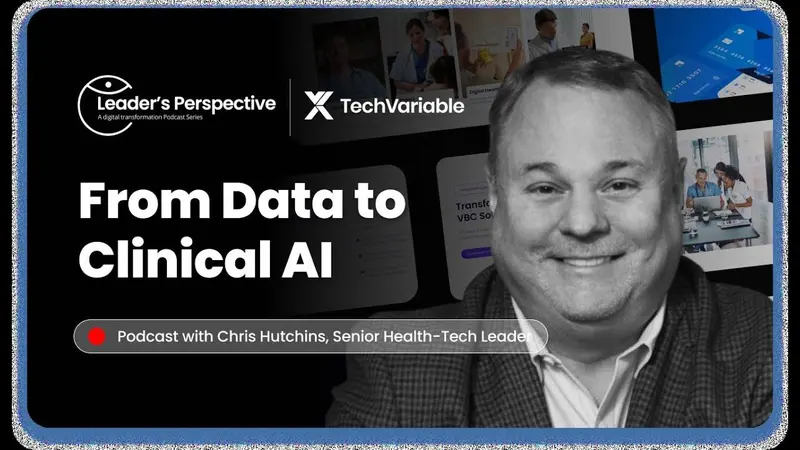
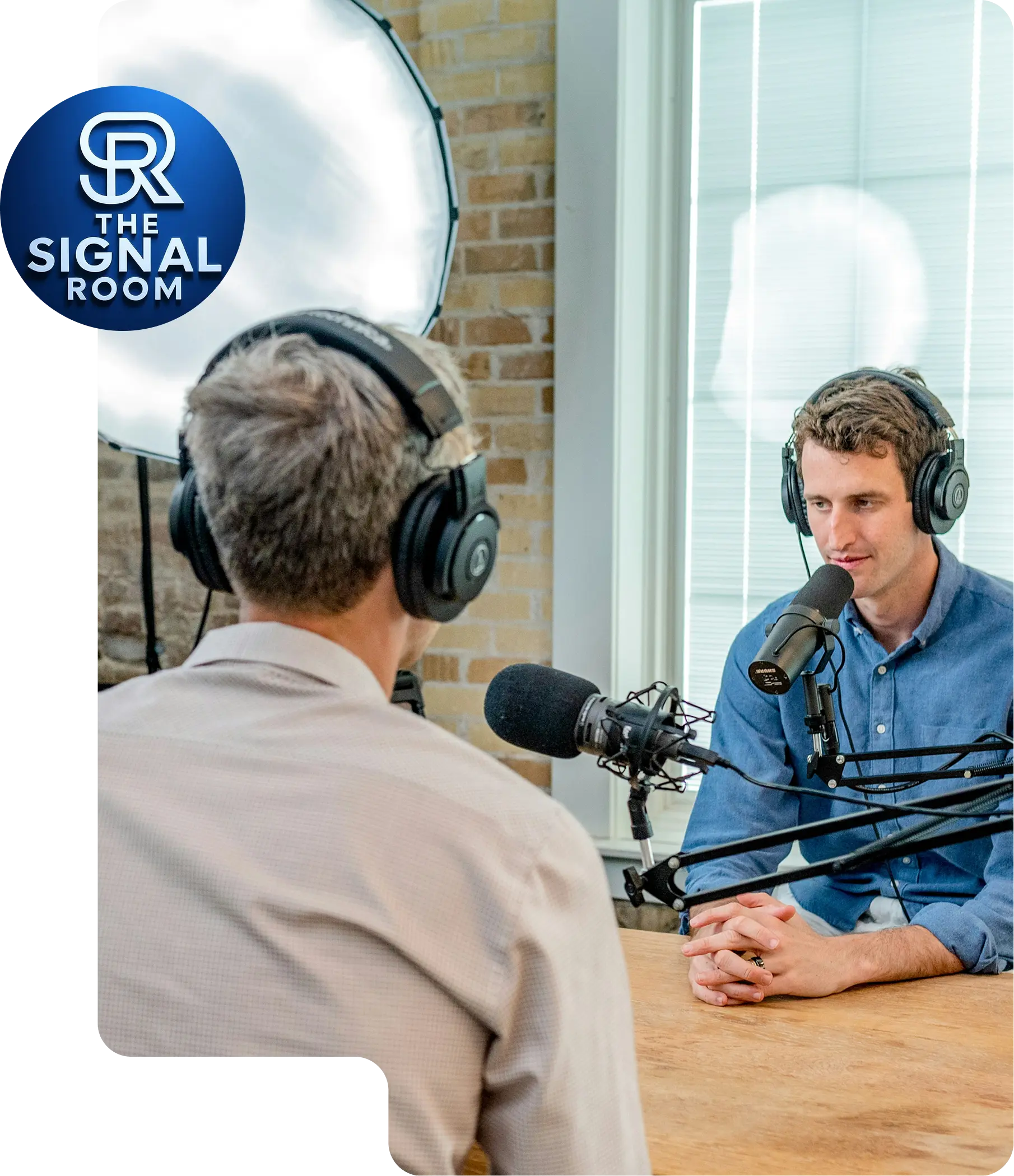
The Signal Room
The Signal Room is a podcast on healthcare AI leadership, ethics, and LLM strategy, hosted by Chris Hutchins. Drawing on over 30 years of enterprise healthcare data leadership, the show examines how executives navigate AI readiness, governance discipline, and real-world implementation. Each conversation centers on responsible adoption, clear decision rights, and the human judgment required to protect institutional trust as technology evolves.
Subscribe NowIf you're navigating AI adoption, governance pressure, or high-stakes decisions that require clarity and strong leadership, let's start with a conversation.
Book a Call Spotify
 Apple
Apple YouTube